Your Grammar Lessons Are Too Teacher-Centred
Inspire Training & Development
Let’s be honest: some grammar lessons feel like teacher karaoke.
The teacher performs the present perfect for twenty minutes. Students watch politely. Everyone pretends learning is happening.
Then the practice activity starts and someone writes, “I have went.” Pain.

What you’ll learn
In this post, you’ll learn five practical ways to make grammar lessons more student-centred, more active, and much less painful.
Grammar Does Not Have to Be a Lecture
Many new ESL teachers feel pressure to explain grammar perfectly. But long explanations often lead to passive students and very little actual use.
A student-centred grammar lesson gets learners noticing, testing, correcting, moving, speaking, and applying grammar in real situations.
1. Grammar Detective
Instead of explaining the rule first, give students examples and ask them to find the pattern.
For example: “I have visited Thailand,” “She has eaten sushi,” and “They have finished their homework.” Then ask what comes after have or has, what changes with he or she, and whether we know exactly when it happened.
This turns grammar into discovery. You are still guiding the lesson, but students are doing the thinking.
2. Fix the Teacher
Students love this one because the teacher is wrong. And for some reason, that is deeply satisfying.
Write incorrect sentences on the board, such as “She go to school every day,” “I am agree with you,” or “He has went home.” Then ask students if they are correct.
The key is that students must explain why. Not just “Teacher, wrong” — powerful, but not quite enough.
3. Human Sentence
Give each student a word and ask the class to arrange themselves into the correct sentence.
For example: yesterday / I / to / the / went / market becomes “I went to the market yesterday.”
This is excellent for kinaesthetic learners, young learners, and any class that has been sitting too long. It also makes word order visible.
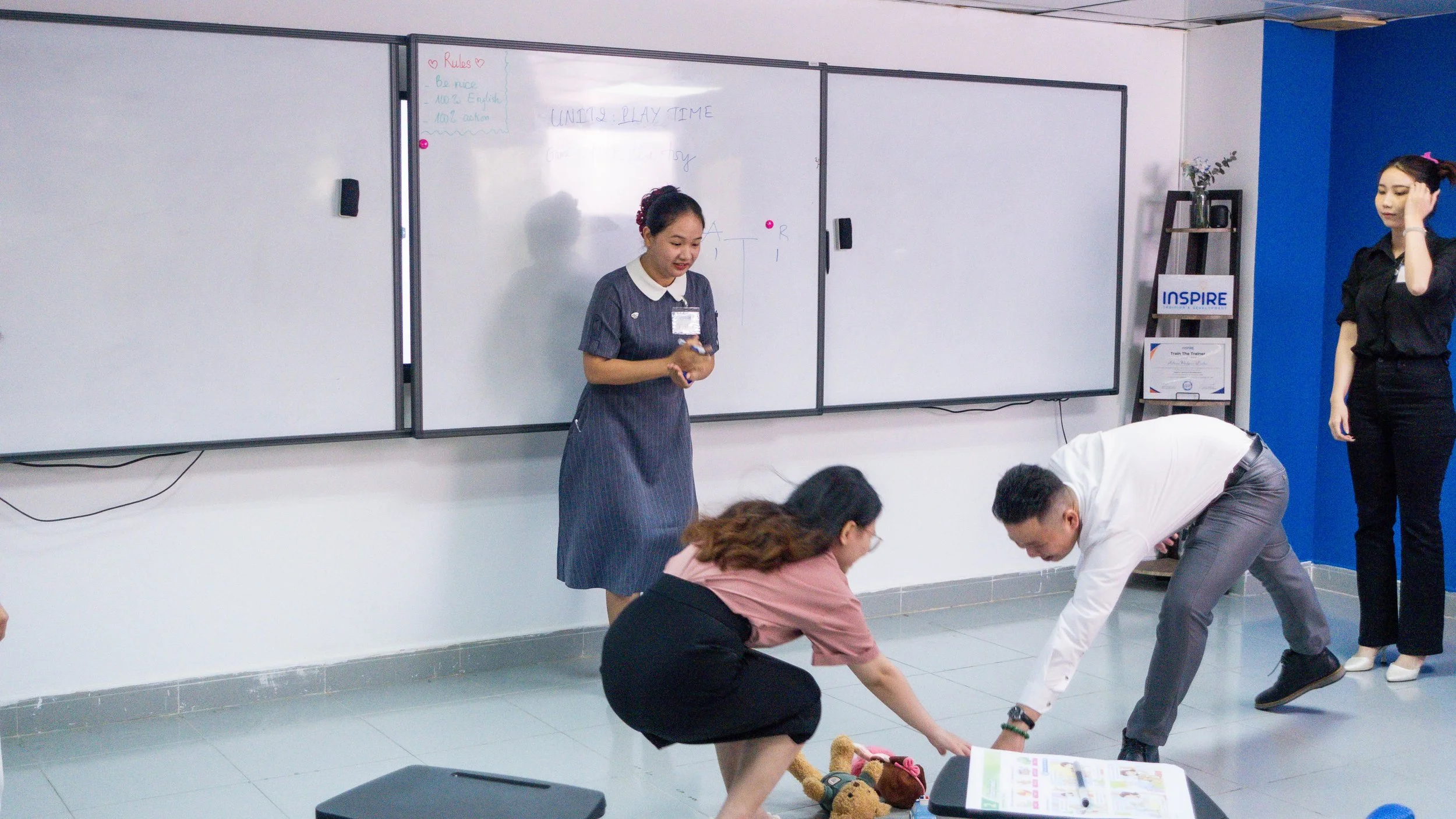
4. Grammar Auction
Write ten sentences on the board. Some are correct. Some are not. Give each team imaginary money and let them bid on the sentences they think are correct.
Suddenly, grammar has risk. And the moment imaginary money appears, students become intense business professionals.
The real learning happens after each round when students discuss why a sentence is correct, why it is wrong, and how to fix it.
5. Personalised Grammar
This is the step teachers often skip.
After students understand the form, ask them to use it to talk about their own lives. For present perfect, ask what they have never tried but want to try, where they have visited, or what they have done this year that they are proud of.
Grammar becomes meaningful when students use it to say something real. Not just “The cat is bigger than the dog.” Poor cat. Poor dog.
Five Student-Centred Grammar Activities to Try
- Grammar Detective: Students notice the pattern before you explain it.
- Fix the Teacher: Students correct mistakes and explain why.
- Human Sentence: Students physically build sentences together.
- Grammar Auction: Students decide which sentences are worth buying.
- Personalised Grammar: Students use the target language to talk about real life.
Want to Teach Grammar with More Confidence?
Our practical TESOL training helps you build real classroom confidence, plan stronger lessons, and become an internationally certified ESL teacher.
A Simple Structure for Student-Centred Grammar Lessons
A strong grammar lesson does not need to start with a long explanation. Start with examples. Let students notice the pattern. Then check the rule together.
After that, move into practice through a game, correction task, sentence-building activity, or discussion. Finally, personalise the grammar through speaking or writing.
The shift is simple but powerful: teacher-centred grammar says, “Listen to me explain.” Student-centred grammar says, “Look, think, test, use.”
Why This Matters for ESL Teachers
Good TESOL training is not just about knowing grammar. It is about knowing how to teach grammar in a way students can actually understand, remember, and use.
When students are involved in discovering, correcting, moving, choosing, and personalising grammar, they become active participants in the lesson.
That is where real classroom confidence comes from — not from delivering perfect lectures, but from designing lessons where students do meaningful work with the language.
Final Thoughts
The next time your grammar lesson feels too quiet, too slow, or too teacher-heavy, try one of these five techniques.
Grammar does not have to drain the room. With the right structure, it can become active, memorable, and genuinely useful.
Become a More Confident ESL Teacher
Build practical classroom skills, learn how to teach grammar effectively, and become an internationally certified ESL teacher with Inspire Training & Development.