Body Language That Makes or Breaks Your Job Interview: The Complete Guide to Communicating Confidence
You walk into a job interview.
You haven’t said a single word yet.
But the interviewer has already formed an impression of you.
How?
Your body language.
Most candidates spend hours preparing perfect answers, memorising scripts, and practising their English…
…but they forget one of the most powerful elements of communication: what your body is saying — before your words even begin.
Whether you’re interviewing in English or your first language, body language communicates confidence, energy, professionalism, and attitude far faster than grammar or vocabulary.
In this complete guide, you’ll learn:
The 4 body-language mistakes that quietly hurt your chances
Practical, simple fixes you can use immediately
Why posture, gestures, and eye contact matter more than you think
How to project confidence even if you’re nervous or using English as a second language
How TESOL training improves communication skills for interviews
If you’re preparing for job interviews, leadership roles, or opportunities that require strong communication skills, this article is for you.
💡 Why Body Language Decides Interviews Faster Than Your Words
Communication researchers often say:
“The interview starts the moment the interviewer sees you — not when you start speaking.”
Body language influences:
First impressions
Likeability
Confidence
Professionalism
Trustworthiness
For ESL speakers, body language becomes even more important because it supports your spoken message. Even if your English is not perfect, confident posture and calm gestures send a powerful message:
“I am capable.”
This is why many TESOL programs — including Inspire TESOL — train teachers and learners in communication skills beyond language. Understanding body language helps you teach better, speak better, and interview better.
⭐ Mistake 1: Weak or Slouched Posture
What Interviewers See:
❌ Disinterest
❌ Low energy
❌ Nervousness
❌ Lack of professionalism
Posture is your visual handshake.
It signals confidence before you speak, and insecurity when ignored.
Slouching, leaning backwards, or collapsing into the chair can make you look unprepared or even lazy — even if you are trying your best.
How to Reset Your Posture Instantly
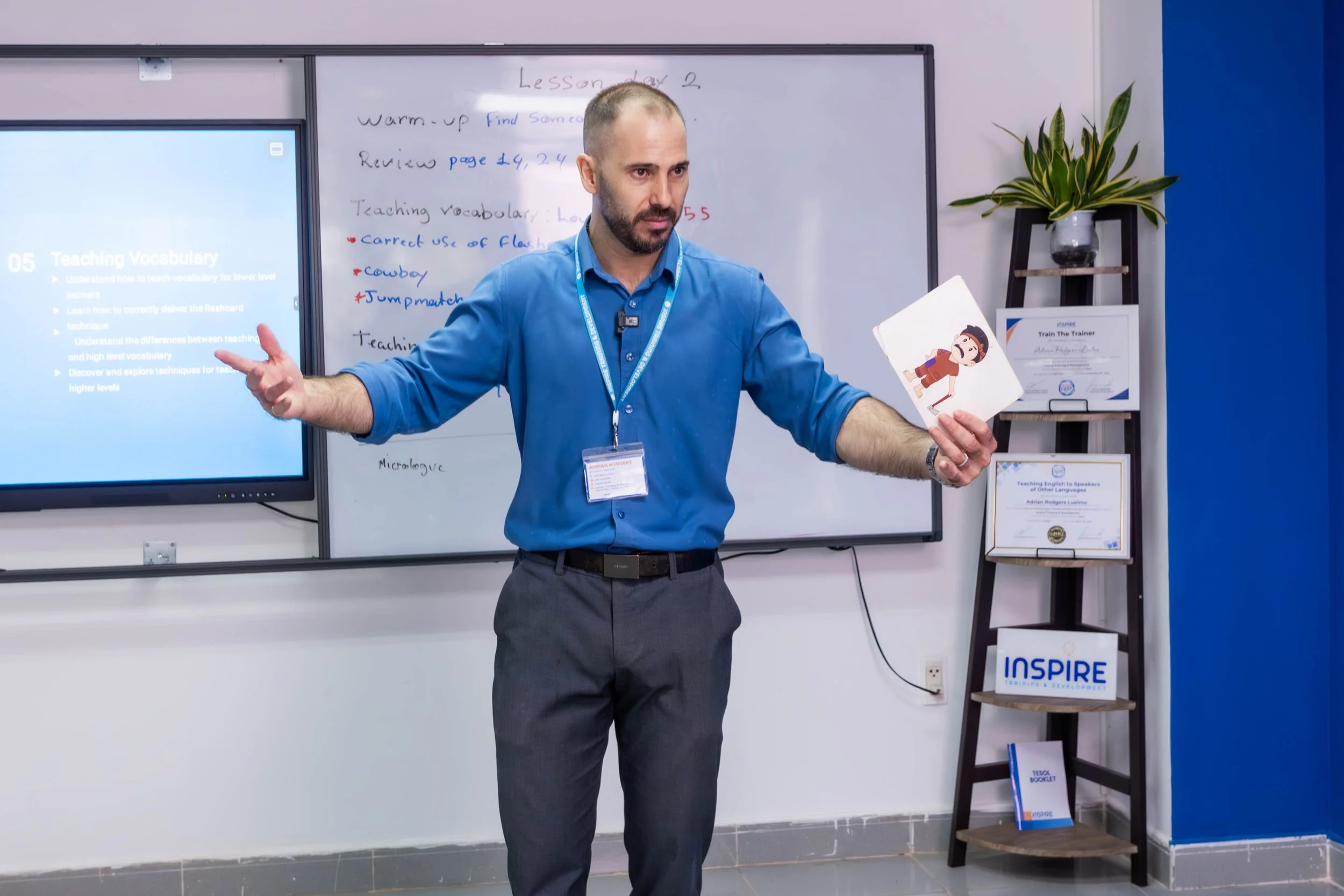
Do this 3-second technique before walking into the room or opening your Zoom camera:
Sit or stand tall
Plant both feet firmly on the ground
Imagine a thread lifting the crown of your head gently upward
Roll your shoulders back — slightly
This small adjustment changes everything.
Interviewers interpret upright posture as:
Confidence
Energy
Readiness
Professional presence
And here’s the best part:
Good posture doesn’t just make you look confident — it makes you feel confident, thanks to how your nervous system responds.
⭐ Mistake 2: Poor or Unnatural Eye Contact
Eye contact is one of the strongest predictors of trust and connection in interviews.
What Interviewers See with Poor Eye Contact:
❌ Evasive
❌ Unprepared
❌ Disconnected
❌ Lacking confidence
But there’s a second problem:
Some candidates swings to the opposite extreme — staring too intensely.
Both extremes damage your communication.
The “Triangle Technique”: Natural, Professional Eye Contact
Instead of staring or avoiding eye contact, use this method:
👁 Look at one eye → other eye → mouth
Then look away briefly (at your notes or hands) before returning.
This creates a soft, steady, professional pattern that feels confident and calm.
This technique is especially useful for ESL speakers who feel pressure to maintain eye contact while searching for vocabulary.
Remember:
Good eye contact is about connection, not perfection.
Love these tips? Learn how to design full professional lessons.
Our TESOL program trains teachers with hands-on classroom practice and international certification
⭐ Mistake 3: Nervous or Closed-Off Gestures
Your hands say more than you think.
Gestures That Hurt You:
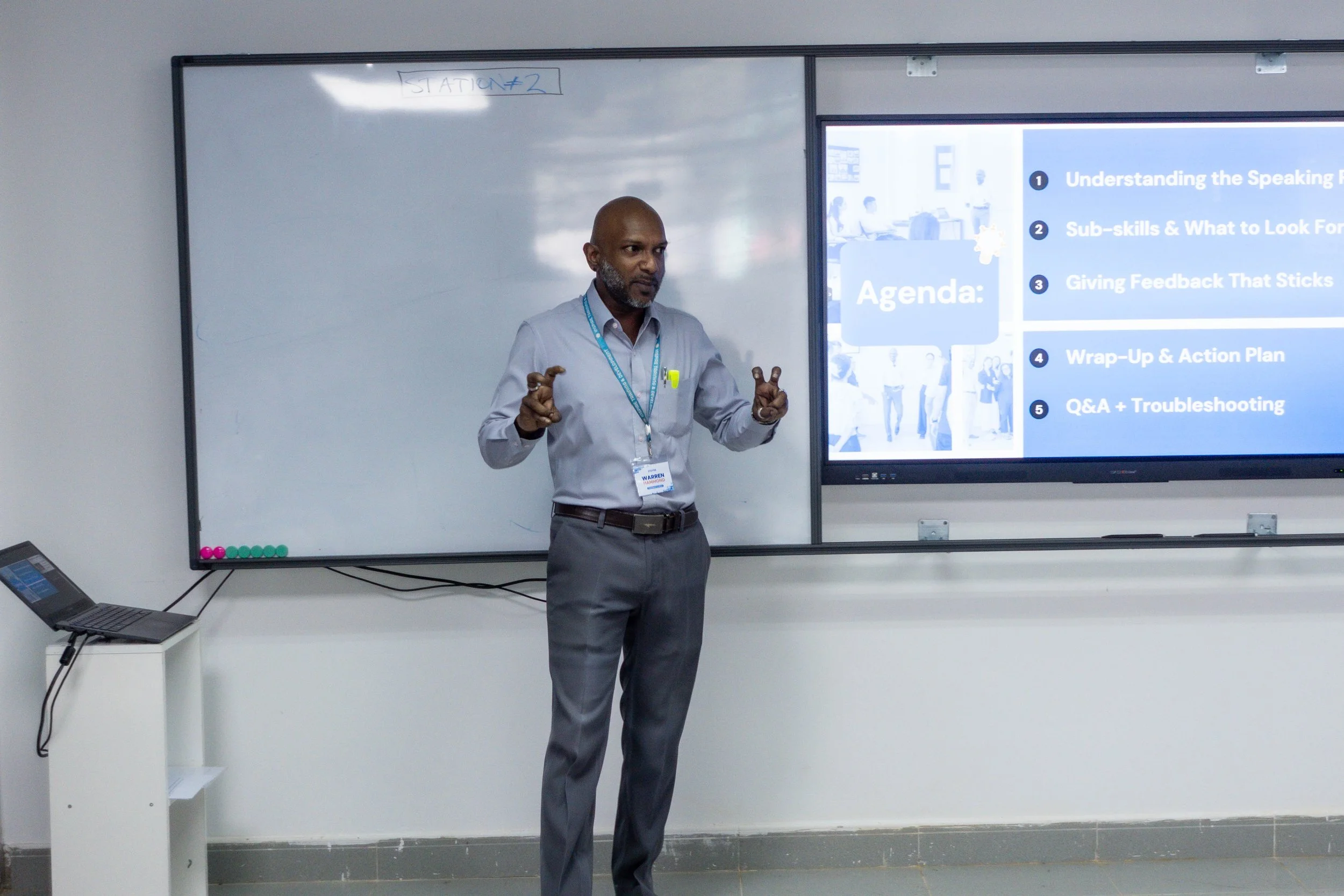
❌ Crossed arms
❌ Tapping fingers
❌ Fidgeting with your pen
❌ Touching your face
❌ Playing with your hair
❌ Clutching your bag for safety
These movements communicate:
Nervousness
Defensiveness
Lack of confidence
Even if your answers are excellent, nervous gestures send the wrong message.
The Fix: Open, Relaxed, Controlled Gestures
Here’s what confident candidates do:
✔ Keep hands visible
✔ Rest them lightly on the table or your lap
✔ Let gestures rise naturally
✔ Use open-hand gestures when emphasising points
These movements communicate:
Openness
Honesty
Calmness
Professionalism
In TESOL training — including Inspire TESOL programs — teachers learn how gestures enhance communication. The same skills apply perfectly to job interviews.
⭐ Mistake 4: Flat or Tense Facial Expressions
Your face is your real first impression.
Many candidates don’t realise how their facial expressions appear under stress:
❌ Tight jaw
❌ Lips pressed
❌ Blank expressions
❌ Raised shoulders
❌ Furrowed brows
This unintentionally communicates:
Stress
Disengagement
Lack of enthusiasm
The Fix: Reset Your Face Before the Interview
Take 10 seconds to:
🟦 Relax your shoulders
🟦 Take one slow breath
🟦 Smile softly
🟦 Release jaw tension
A warm, natural expression signals:
Friendliness
Openness
Professionalism
Likeability
Interviewers don’t just hire skills — they hire people they enjoy speaking with.
⭐ Putting It All Together: The Before-and-After Effect
Bad Example (What Many Candidates Accidentally Do):
Slouched posture
No eye contact
Fidgeting hands
Blank or tense face
Even if their answers are perfect, the overall impression is poor.
Good Example (What Successful Candidates Do):
Upright posture
Soft, steady eye contact
Relaxed gestures
Warm expressions
This combination creates a powerful message:
“I am confident, capable, and ready.”
⭐ Bonus: 4 Fast Wins for Instant Confidence
Use these before every interview:
✔ 1. Walk into the room with purpose
Smooth steps, gentle smile, eye contact — this sets the tone immediately.
✔ 2. Don’t hold your bag tightly
This signals fear.
Place it beside you calmly.
✔ 3. Mirror the interviewer subtly
If they smile, you smile.
If they lean forward, you lean slightly forward.
If they speak softly, you adjust to match.
This creates natural psychological rapport.
✔ 4. Record yourself practising
You’ll spot:
Strange habits
Nervous gestures
Weak posture
This is why many professionals take TESOL or public speaking workshops:
reflective practice transforms communication.
⭐ How TESOL Training Improves Interview Body Language
TESOL isn’t just about teaching English.
It trains you in:
Vocal clarity
Classroom presence
Professional posture
Clear gestures
Confident communication
Public speaking
Interaction and engagement
These skills are identical to what you need in job interviews.
If you want stronger communication, presentation skills, and confidence:
👉 Join INSPIRE for better TESOL
👉 Inspire TESOL programs help you master communication — not just grammar
👉 Learn how to speak clearly, confidently, professionally
Whether you’re preparing for teaching, business roles, global positions, or simply improving your English, TESOL training strengthens every part of your communication.
⭐ Conclusion: Your Body Speaks Before You Do
Remember:
You don’t need perfect English to make a strong first impression.
You need clear, confident body language.
Focus on:
✔ Upright posture
✔ Natural eye contact
✔ Calm, open gestures
✔ Warm expressions
✔ Small moments of connection
Master these basics, and you’ll walk into your next interview with real confidence — and walk out with a stronger chance of success.
If you’re ready to improve your communication, public speaking, or ESL teaching skills:
👉 Join INSPIRE for better TESOL
👉 Explore online and in-class TESOL programs
👉 Learn from experienced trainers who specialise in effective communication