5 Fun Vocabulary Games That Boost ESL Students’ Retention and Recall
Inspire Training & Development
Five practical vocabulary games to make new language more memorable, interactive and enjoyable for ESL learners.
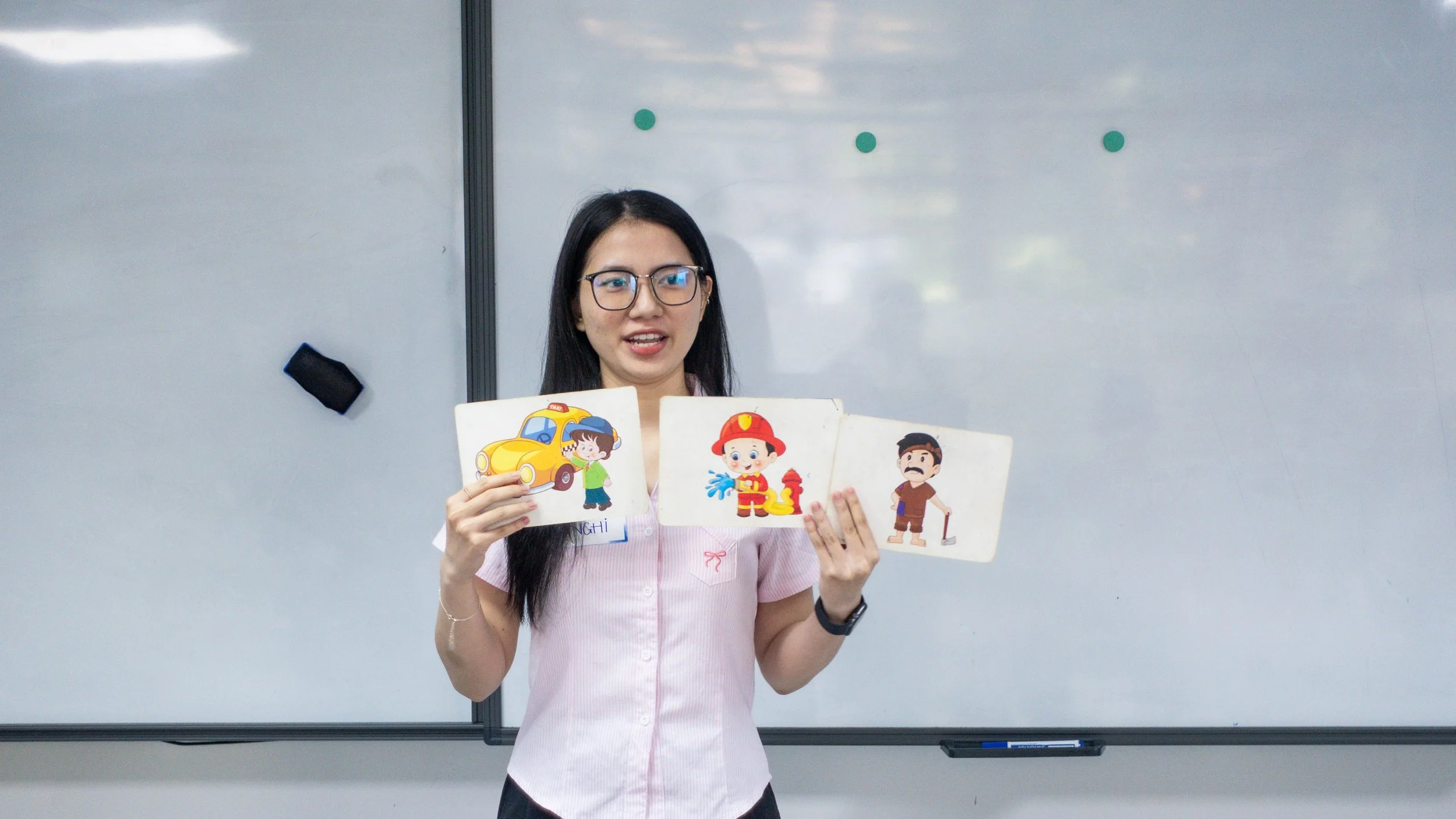
As an ESL teacher, you have probably seen students learn a new word one day and forget it soon after. The good news is that vocabulary learning does not need to feel repetitive or dull.
Well-chosen vocabulary games help learners retrieve words repeatedly, make meaningful connections and use new language with other people. Below are five activities that can help students remember vocabulary for longer.
Watch a Vocabulary Activity in Action
Make Vocabulary Practice More Active
Vocabulary activities work best when learners are not simply repeating words, but using them to react, compete, describe, remember and communicate.
5 Vocabulary Games That Actually Help Students Remember
Game 1
Vocabulary Basketball
Use this game as a quick vocabulary review near the end of a lesson. Students answer a question about a word, definition or picture. When they answer correctly, they get a chance to throw a paper ball into a bin for points.
Why it works: It combines retrieval practice with a fast-paced, low-pressure reward. It is especially useful for kinesthetic learners and short speaking practice.
Teacher tip: Keep the questions easy enough to maintain momentum, then increase the challenge as the class becomes more confident.
Game 2
Word Association Chain
Start with a word such as “apple.” The next learner says a related word, such as “fruit,” and the next might say “banana.” Continue the chain and encourage learners to explain a connection if needed.
Why it works: Students build lexical connections rather than trying to remember isolated word lists.
Teacher tip: Add challenge cards such as “use an adjective,” “use a verb” or “explain the connection” for higher-level learners.
Game 3
Vocabulary Pictionary
One student draws a vocabulary item while the rest of the class guesses. It works well with topics such as jobs, weather, food, transport, animals or classroom objects.
Why it works: Learners connect vocabulary to images, actions and peer interaction. It is particularly useful for visual learners.
Teacher tip: Give teams a short time limit and require the winning team to use the word in a complete sentence afterwards.
Want More Ready-to-Use Vocabulary Activities?
Explore free teaching resources that can save preparation time and give you practical materials to use in your classroom.
Get Free Teaching ResourcesGame 4
Mystery Bag
Place objects or picture cards inside a bag. One learner pulls out an item without showing the group, then describes it while classmates guess what it is.
Why it works: It encourages descriptive language, listening and confident speaking while keeping the vocabulary focus clear.
Teacher tip: Start by modelling a description yourself: “It is small, round and you can eat it.” Then let learners take over.
Game 5
Vocabulary Relay
Put vocabulary cards at one end of the room. Teams race to collect a card, then define the word, match it to a picture or use it in a sentence before returning for another card.
Why it works: It gives younger learners a chance to move while still practising recall, meaning and sentence-building.
Teacher tip: Make accuracy part of the scoring. A team only earns a point when the word is used correctly.

Why Vocabulary Games Work
These games encourage active participation, give learners real-time language practice and help them make useful connections with new words. They can also be adapted for different ages, levels and class sizes.
The key is not just choosing a fun game. Build in opportunities for students to retrieve vocabulary, explain it, hear it from others and use it again in a meaningful sentence.
Keep Developing Your Teaching
Explore The Teacher Trainers Hub
Find practical teaching videos, classroom ideas, courses and resources to help you create stronger, more engaging English lessons.
Explore The Teacher Trainers Hub